Friday, April 17, 2020

Ashley Graham Swaps Faces With Husband Justin Ervin Using Trippy Instagram Filter and We Are Not OK


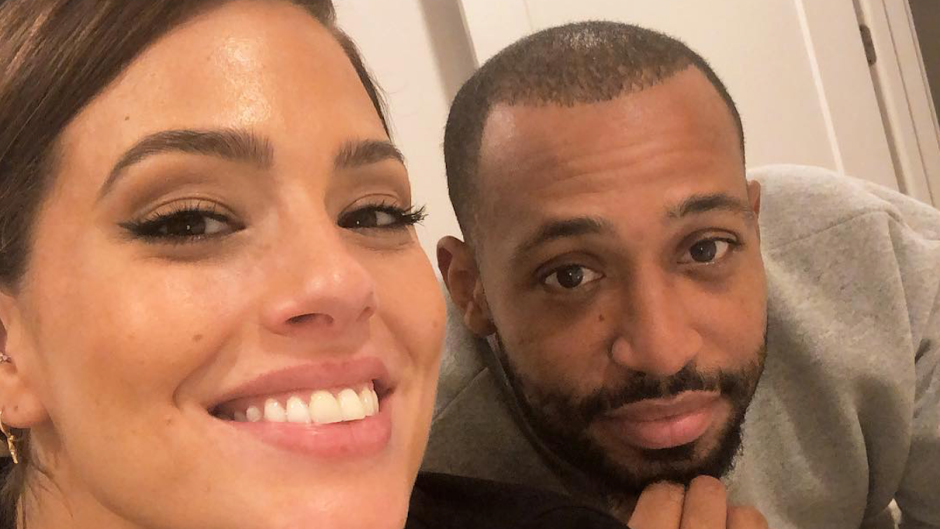
Staying entertained! Ashley Graham took to Instagram on Thursday, April 16, to share a hilarious photo in which she and her husband, Justin Ervin, swapped faces using a pretty trippy filter.

“#Quarantined,” the 32-year-old captioned the snap. Fans couldn’t help but comment on the funny picture. “Why do you both have facial hair?” wrote one person. “OMG terrifying LOL,” replied a second follower. “I’m like, ‘Who are these people I’m following’ until I checked the username,” commented a third. Honestly, same.

When Ashley and her hubby aren’t being silly on the ‘gram, they’re most likely busy with their son, Isaac Menelik Giovanni Ervin. The married couple welcomed their first child in January and have gotten pretty candid about what parenting has been like for them so far.

Ashley Graham's Son Isaac Baby Photos
ASHLEY GRAHAM'S 'SWEET BOY' ISAAC IS TOO CUTE! SEE ALL HIS PHOTOS SO FAR
For starters, Ashley revealed giving natural birth at home empowered her.

“I have to say now though that I gave birth, and I did it naturally and I felt everything, I feel like there’s nothing I can’t do,” the model divulged on her “Pretty Big Deal” podcast in February. “Like there’s nothing that can come my way where I’d say, ‘That’s too hard. I can’t handle that.’ I went through laboring for six hours naturally.”

It’s safe to say the experience of being pregnant and giving birth changed Ashley forever. “Going through that experience … Going through the hardship of my body changing, having to go back to practice what I preach, and then going through the invincible laboring birth experience that I did and now to be able to stand tall and say, ‘Wow I did it,'” she said.

Naturally, Justin felt super proud of his wife. “The way you handled that and the way you did that was a testament,” he told her at the time. “It was the icing to the cake to how well you prepared in advance through working out, through eating well, through staying active, to taking the stairs, to doing yoga, to everything that you did to prepare for the biggest workout of your life.”

The rich and famous are quarantine flexing by posting backyards and open spaces on Instagram, illustrating the issue of privilege in social distancing


Back on March 17, before stay-at-home orders and endless days of social distancing became the norm, Toronto-based musician Drake posted a picture of his indoor basketball court to his Instagram Story. He had been spotted hanging out with Kevin Durant a week prior, and Durant was one of four Brooklyn Nets players to test positive for the coronavirus.

"My life for the next however long," a self-quarantined Drake seemed to sullenly caption the shot from inside his soon-to-be revealed $7 million mansion, which was profiled in Architectural Digest less than a month later (the shoot was finalized before quarantine). In the music video for his latest Billboard no. 1 hit "Toosie Slide," Drake slid around his excessively lavish "pleasure dome."

"I have a tough time with diminishing other peoples' experiences of what's happening to them, but when I saw his music video I was like 'Wow, this is great, you're rubbing this giant mansion in all of our faces,'" Robin Mazumder told Insider. Mazumder holds a Master's degree in occupational therapy and is a cognitive neuroscience PhD candidate at the University of Waterloo studying how urban design and cities affect "how we feel and function."

He believes that social distancing measures, despite being imperative from a public health standpoint, are disproportionately punishing those in poverty who may not have easy access to the kinds of indoor and outdoor spaces conducive to mental health and wellbeing during quarantine.


The class differences in access to private space are starkly on display, thanks to social media posts from wealthy individuals and celebrities staying at home. Despite the coronavirus pandemic making us "all equal," as elected officials and A-listers alike have insisted, it actually seems to showcase how privileged wealthy elites are, even when trapped inside their multimillion-dollar mansions with enviable backyards. 

"I've seen first-hand what kind of conditions people live in and how especially important it is for most people to access  the outdoors, especially at a time like this, let alone just in general," Mazumder, who worked in a clinical mental health capacity for five years, said.

"What I've been seeing on social media and what I've been seeing from many politicians is this kind of authoritarian approach to reprimanding people, and I think that, while I can't make any assumptions, I do wonder how much they're empathizing with people who may not be in their own circumstances financially."

When wealthy people complain about quarantine from inside their luxurious homes, it feeds a growing anti-celebrity sentiment
Mazumder isn't the only person bothered by the discrepancy between rich celebrities complaining at home and people confined to inner-city apartments, or even Midwest suburbia. Danny Pellegrino, a writer and pop culture podcast host based in downtown Los Angeles, was inspired to tweet about his outdoor space envy after scrolling through Instagram and seeing people complaining while posting from their yards.

"I don't mean to complain, I know people have it way worse, but I just get a little jealous of people who have yards right now," Pellegrino told Insider. "I'm in an apartment building and my apartment is a great space, but I don't have any yard space. I don't have a bit of grass. I can get outside of my building and there are some small pieces of grass and shared community space, but if you go to one of those you're surrounded by people who have to walk their dog."
You can get a millions of Free Instagram Followers by using our free premium tool.

When he watched the Gal Gadot-led celebrity cover of John Lennon's "Imagine," Pellegrino felt, like many others, that celebrities should be donating some of their money instead of crooning at their front camera from inside their spacious homes. The anti-celebrity sentiment has been felt all over the internet during the pandemic.

Amanda Hess wrote in The New York Times that celebrity culture is burning, and that "the dream of class mobility dissipates when society locks down, the economy stalls, the death count mounts and everyone's future is frozen inside their own crowded apartment or palatial mansion. The difference between the two has never been more obvious."

When Jennifer Lopez tweeted a video of her 12-year-old son Max hoverboarding around her lime green backyard, serving Alex Rodriguez a can of Perrier, many of the replies compared her opulent mansion to the house in "Parasite," the 2020 Best Picture thriller that told a modern tale of greed, privilege, and the class divide.

"I love J. Lo and A-Rod, I love them, but they post 'Stay in your house' – which is the right message to share – but then we also see a paparazzi shot of them getting access to a full gym, where they're able to go inside," Pellegrino said, referencing photos taken of Lopez and Rodriguez that appear to show them leaving their private Miami gym on April 1.

"I think it's tough in a small apartment or studio or wherever you live when you see celebrities, they're just being like that on social media, it's frustrating," he added. "I just think oftentimes, some celebrities are out of touch with what the average person goes through."

Another person who tweeted about the celebrity disconnect was 19-year-old Trishna Rikhy, a New York University student studying journalism and art history who uses her "@ULTRAGLOSS" Twitter handle to regularly craft viral tweets with hundreds of thousands of likes. She suggested, in jest, that a celebrity complaining about quarantine trade places with her where she's staying right now, at her parents' Washington, DC home.
Instagram Allowed For Truth To Be Crafted, Despite 'No Filter' Options


In 2018, shortly after hitting 1 billion users, photo-sharing app Instagram celebrated a flashy product launch in San Francisco with a lineup of its greatest hits: There were cruffins and avocado toast, areas for selfie-taking and a barista serving matcha lattes.

The spread was like an Instagram feed pulled offline, but by that time the world — digital and material — had already bent to fit the app's standards. Online, influencers and brands were profiting from the app. Offline, restaurants, hotels, bookstores and museums around the world had designed their spaces to be Instagrammable.

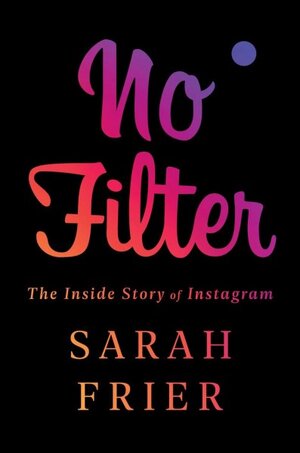
Bloomberg reporter Sarah Frier's No Filter is a vibrant play-by-play of how Instagram reached that level of influence through the business of manufacturing coolness. "The story of Instagram," she writes, "is an overwhelming lesson in how the decisions inside a social media company... can dramatically impact the way we live, and who is rewarded in our economy."

Frier's version of that story is rich with details, based on hundreds of interviews including sit-downs with the app's co-founders Kevin Systrom and Mike Krieger. Armed with their perspective, Frier is able to draw a line between each decision the founders made and the cultural consequences. Their earliest design choices, a menu of nostalgic photo filters and a square crop, laid the groundwork for a culture of perfection on the app by signaling to users that to post on Instagram is to enhance — and, in turn, to deceive.

'Facebook: The Inside Story' Reveals A Company Made In Its Founder's Image
BOOK REVIEWS
'Facebook: The Inside Story' Reveals A Company Made In Its Founder's Image
One of the great insights in No Filter is just how much those choices hinged on the personal (and very Silicon Valley) tastes of Instagram's leaders. Systrom, for one, is an art history buff with "very specific taste in music and an appreciation for high-quality coffee." He's obsessed with bourbon and bikes that retail for tens of thousands of dollars, Frier writes. The more we learn about him, the easier it is to understand how Instagram began to reward certain types of images.

Frier is sharp in showing how even the features Systrom and Krieger chose not to build — like the ability to hyperlink or a re-gram button — can be traced to their own consequences. Even when Snapchat's disappearing photos posed a sizable threat, the Instagram team initially resisted adding "stories" for fear of lowering the bar for what got posted. "Instagram is not for half-eaten sandwiches," Systrom told employees before copying the feature anyway. (Stories gave people a place to put temporary content that wasn't necessarily "Insta"-worthy — the founders didn't want it to end up on Snapchat instead.)

The irresistible drama of No Filter plays out between the founders and Facebook CEO Mark Zuckerberg, who purchased Instagram for $1 billion in 2012. It's wearisome to learn that the story of Instagram is, in many ways, another story about Zuckerberg. But Frier finds that the clash between Instagram's brand of meticulous curation and Facebook's obsession with growth was responsible for much of what we see when we scroll now.

When Zuckerberg pushed Instagram to start placing ads in its feed, for example, the Instagram team recoiled at the idea of blatant self-promotion. Frier writes:

"Systrom didn't want Instagram to turn into a collection of unsightly roadside billboards. When users posted about brands... it would be best if they acted like they were letting their audience in on a life secret."

Instead, Instagram nudged brands towards ads that were hard to distinguish from posts by friends — paving the way for influencer culture.

Frier's most original reporting chronicles Zuckerberg's intense jealousy of Instagram's rapid growth and the extent to which he tried to protect Facebook from being "cannibalized" by Systrom and Krieger's creation. It's stunning (and silly) to learn how Zuckerberg siphoned resources and independence away from the founders. Frier writes that a former Instagram employee complained: "Facebook was like the big sister that wants to dress you up for the party but does not want you to be prettier than she is." In 2018, this dynamic pushed Systrom and Krieger to leave the app they built.

Frier makes No Filter's focus on this pettiness worthwhile by highlighting a fundamental difference between the two platforms: While Facebook is powered by algorithmic curation, optimized around ad revenue and attention, Instagram is a more thoughtfully crafted product. Led by these values, Zuckerberg has for years faced blowback for Facebook's abuse of user's data privacy and its role in spreading misinformation. On the other hand, public scrutiny of Instagram has been less harsh. The app, fittingly, has had better luck cultivating its self-image.

But Frier is willing to find the cracks in Instagram's glossy appearance: There's a 2017 study from the Royal Society for Public Health in the U.K. that named Instagram the worst app for mental health for young people. She also cites research commissioned by the Senate Intelligence Committee that found the Russian-sponsored troll farm that spread misinformation around the 2016 U.S. presidential election received more likes and comments on its Instagram account than on any other platform. She nods to the founders' indifference to the way their app would give people "permission to present their reality as more beautiful than it actually was." Though No Filter would be stronger with greater insight into the costs of that indifference.

With more than 2.8 billion users across what Zuckerberg calls a "family of apps," Facebook is still the most powerful social network in the world— and Instagram is the primary driver of its revenue growth. With each move Instagram makes affecting more than 1 billion of us each month, we'd benefit from looking more closely at how Instagram's choices influence our own. No Filter makes it easy to start paying attention.

Adam Mosseri, now head of Instagram, faces new challenges like beefing up content moderation and answering to federal regulators who have become concerned that Zuckerberg's purchase of the app might have made Facebook a monopoly. But Frier tells us Instagram has also been working on its perfection problem, asking its most influential users to be more vulnerable on the app.
Source NPR

‘Salman Khan or MS Dhoni?’ – Kedar Jadhav faces tricky question on Instagram live session; picks one


Kedar Jadhav, the Indian cricketer has always shown his incline towards Bollywood actor Salman Khan and former Indian skipper MS Dhoni. In one of the chat shows, he had also opened up saying that the Bollywood actor is his all-time favourite. Amid Coronavirus outbreak, the 35-year-old conducted a live session with his fans on Instagram. During the chat, he was asked to pick one between the aforementioned famous personalities, to which Jadhav came out with a pleasing response.

He made his debut back in 2014 but he is still struggling to reserve his berth in the side due to his inconsistency with the bat. However, he has helped Team India in winning some crucial games. The Indian middle-order batsman also played under the captaincy of MS Dhoni in the national side.

Moreover, he is currently part of Chennai Super Kings that is lead by the 38-year-old former Indian skipper. On the other hand, he admires Salman Khan to an extreme extent. There was also an instance when he celebrated his ton for Men in Blue, in Dabangg movie style. So, his fans knew about it and darted a perfect question towards Jadhav.


Kedar Jadhav opens up on the tricky question
In the live session, a follower asked the 35-year-old Indian cricketer to pick one between MS Dhoni and Salman Khan. In answer to his question, Jadhav took a small pause and said that superstar word is a mix of two words i-e- Super+star.

It was quite difficult for him to pick one between the two personalities. In a diplomatic way, he recited that all credit goes to Dhoni due to which he could play for Team India for so long. Moreover, it was MSD, who fulfilled his wish to meet Salman Khan according to Jadhav. In the end, finally, he picked Dhoni ahead of Bollywood actor. According to him, it was like which parent is yours.

“Superstar for me is a mix of two words – super and star. So for me, they both are like a superstar. I cannot differentiate but I would still like to clear this that because of MS Dhoni I have been able to play the duration I have played. And because of Mahi Bhai, I got to meet Salman Bhai. I think it will always be Mahi Bhai first then Salman Bhai but it is very difficult for me. It is like asking which parent is your favorite?” Kedar justified on Instagram Live.